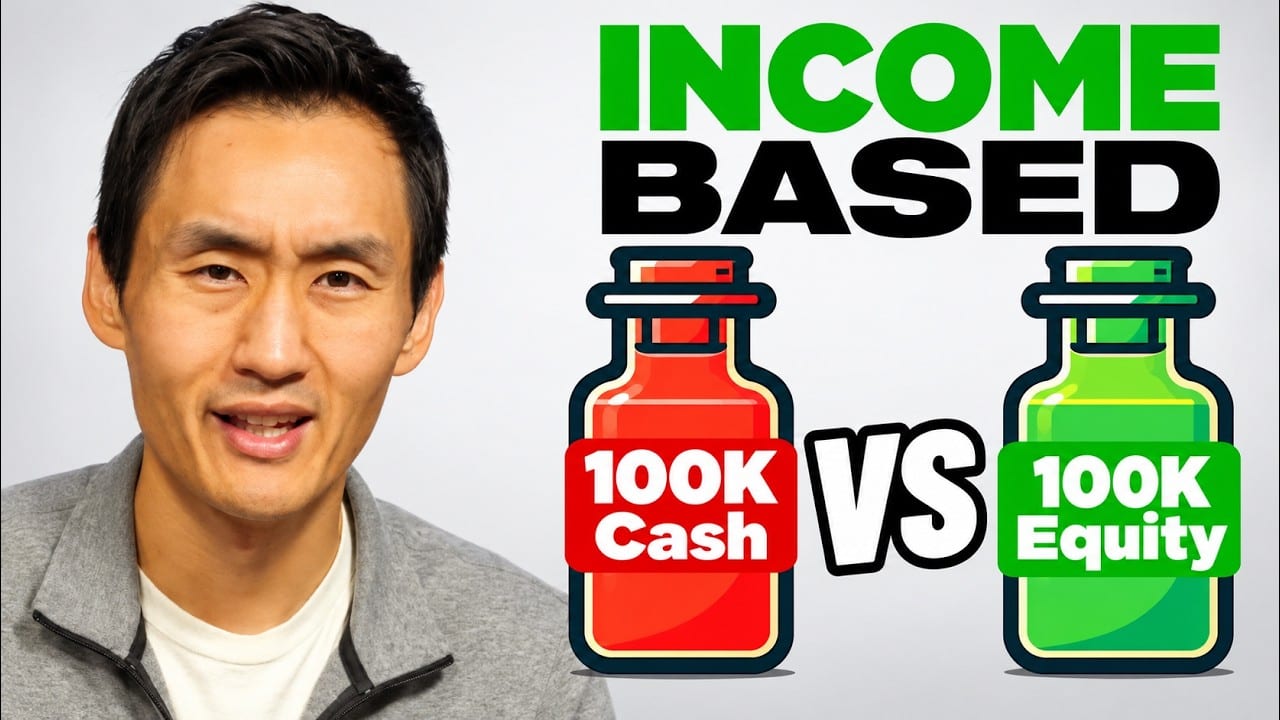
Two people both have $100,000 of net worth. Person one has $100,000 in cash. Person two has $100,000 in home equity. On paper, they look the same. In real life, they do not have the same flexibility, the same risk, or the same opportunities.
So who is actually wealthier?
Neither one automatically. Cash wins on flexibility, because you can use it today for an emergency or an opportunity. Home equity wins on forced, long-term wealth building, because it is harder to spend and grows as you pay down your loan. The strongest position is having both: equity building in the background and enough liquid cash, or access to it, that you are never forced to borrow or sell in a crisis. Net worth and financial flexibility are not the same thing.
My brother Daniel breaks this down in our video:
$100,000 in Cash vs. $100,000 in Home Equity: Who Is Actually Wealthier?
This video is hosted by YouTube. Accept cookies or click to load it.
What cash does
Cash is flexibility. It can pay an emergency bill, cover a job loss, fund a down payment, buy you time, and give you leverage to negotiate.
The downside is that cash can lose purchasing power to inflation, and it usually grows slower than productive assets. So cash is not the best long-term wealth builder, but it is one of the best short-term survival tools.
What home equity does
Home equity is the ownership value inside your house. If your home is worth $500,000 and you owe $400,000, you have about $100,000 of gross equity before selling or borrowing costs.
That equity is real, but it is trapped inside the property until you sell, refinance, or borrow against it. This is why someone can have a high net worth and still feel broke. They own value, but they cannot easily spend it. I wrote about that feeling in Why People Making $200K Still Feel Broke.
Four tests: cash vs equity
1. The emergency test
Both people lose their jobs. The person with $100,000 in cash can pay bills immediately. The person with $100,000 in equity is strong on paper but needs a way to get to the money.
They could sell the house, but that takes time and comes with commissions and closing costs. They could refinance or open a home equity line, but approval depends on income, credit, property value, lender rules, and timing. And getting approved for a loan right after losing your job is much harder.
Winner: cash. Cash is already liquid. Equity has to be converted.
2. The opportunity test
A great investment opportunity shows up. The person with cash can move quickly. The person with equity can only act if they already have a line of credit in place or can get financing in time.
Winner: cash, or equity with a line already open. Opportunity rewards readiness.
3. The discipline test
Now flip it. Cash is flexible, and flexibility can be dangerous. $100,000 in cash can be spent. Home equity is much harder to spend casually. For some people, that is a feature. A homeowner who steadily pays down a mortgage builds wealth because the structure forces them to.
Winner: equity. It protects some people from themselves.
4. The retirement test
A person with a paid-off or mostly paid-off home has a much lower housing cost in retirement. That is a major advantage. But if almost all of their wealth is in the house and they have very little cash flow, they may be house rich and cash poor. Meanwhile, the person with cash may still face a mortgage or rising rent.
Winner: it depends on the structure. There is no universal answer.
Equity is not cash, and borrowing capacity is not either
Here is a trap Daniel talks about. People say, "I have $100,000 in equity, so I have $100,000 available." Not exactly. There are three different things:
- Home equity is the value you own.
- Approved borrowing capacity is what a lender will actually let you access. It depends on your income, credit, debt-to-income ratio, property value, loan-to-value limits, occupancy, and market conditions. It is almost always less than your full equity.
- Cash in the bank is money you can spend today.
Those are not the same. And even an approved line of credit can be frozen or reduced by a lender. I explain how to prepare for that in What Happens If the Bank Freezes Your HELOC?
Cash has a trap too
People can sit on cash forever because they are afraid to make a move. It feels safe, but inflation slowly erodes it, and opportunities pass by.
Cash is powerful when it has a job: an emergency fund, an opportunity fund, a down payment fund, a tax reserve, or a business reserve. Cash without a purpose can turn into procrastination. If you are not sure where to start, read What to Do With $10,000.
How to use home equity wisely
If you have equity, there are several ways to access it, each with tradeoffs:
- A home equity line of credit (HELOC). Flexible and revolving. This is our favorite tool, because you only pay interest on what you use.
- A home equity loan. A lump sum with fixed payments.
- A cash-out refinance. Replaces your mortgage, which can mean giving up a low rate.
- A reverse mortgage for eligible homeowners 62 and older.
- Selling or downsizing.
Before you tap equity for anything, ask four questions:
- What is the purpose?
- What is the cost?
- What is the repayment plan?
- What happens if the plan changes?
Using equity to pay off high-interest debt can lower your interest costs dramatically, but only if your spending habits change. If they do not, you have turned unsecured debt into debt tied to your home. Using equity to invest can create opportunity, but if the investment fails, your home is on the line. I cover the line between good and bad debt in Good Debt vs Bad Debt for Homeowners.
Your financial flexibility score
Here is a simple way to see where you stand. Give yourself one point for each:
- You have at least 3 months of expenses in liquid cash
- Your rent or mortgage payment is comfortable
- You have no high-interest consumer debt
- You invest consistently
- You have home equity or another meaningful asset, like a rental property or a business
- You have access to credit before you need it, not after you are desperate
The person with $100,000 in cash may score high on liquidity but low on assets. The person with $100,000 in equity may score high on ownership but low on liquidity. The strongest person is building both.
What to do next, based on where you are
- Cash heavy, no assets: start putting money to work carefully.
- Equity heavy, cash poor: build liquidity before you push harder on equity.
- Both, plus high-interest debt: clean up the debt first.
- Equity you want to use: do not rush. Compare the cost, the risk, and the purpose.
One approach I teach combines both sides. Instead of choosing between cash in checking and equity locked in the house, homeowners keep a HELOC open, run their paycheck through it, and use their cash flow to pay down the mortgage faster while still having access to money. I explain the tradeoffs in Emergency Fund vs HELOC.
FAQ
Is cash or home equity better? Neither is better in every case. Cash is better for emergencies and quick opportunities. Equity is better for forced, long-term wealth building and lower housing costs over time. Most people need both.
Is home equity the same as cash? No. Equity has to be converted through a sale, refinance, or loan, and a lender may not let you borrow all of it.
Does home equity count toward net worth? Yes. But net worth does not measure how easily you can use that money.
How much cash should I keep if I have a lot of home equity? A common starting point is at least 3 months of expenses in liquid cash, even if you also have a line of credit.
What is the best way to access home equity? It depends on your purpose. A HELOC is flexible and revolving, a home equity loan gives you a lump sum with fixed payments, and a cash-out refinance replaces your mortgage.
See what your cash flow could do
Want to see how your cash flow and home equity could work together to pay off your mortgage faster? Download my free calculator, enter your income, expenses, and mortgage details, and see an estimate of the time and interest you could save.
This article is for educational purposes only and is not tax, legal, or financial advice.